Workshop · Tirana, Albania
Custom dining tables: solid wood, extending and drop-leaf
At Formo Atelier we build custom dining tables in our Tirana workshop: solid oak, walnut and ash tables for four to ten people, extending tables with a centre leaf, a butterfly leaf or end extensions, drop-leaf and console tables for small flats, round and oval tables, and the bench and sideboard that go with them. Every table is sized from the clearances of your room and the chairs you own, not from a catalogue, so six people eat comfortably every day and eight fit when guests come.
Free, itemized quote within one business day.
- Years at the bench, from the workshops of Athens to our own in Tirana.
- 30+
- Commissions built to measure and installed by our own team.
- 300+
- European-standard materials and hardware, on every piece, no exceptions.
- 100%
What we build
Every dining table, from four seats to ten
Every order starts with three numbers: the space the room can give the table with 90 cm around it, the number of people who eat there every day, and the number who come on holidays. The size, the shape and the mechanism follow from those.
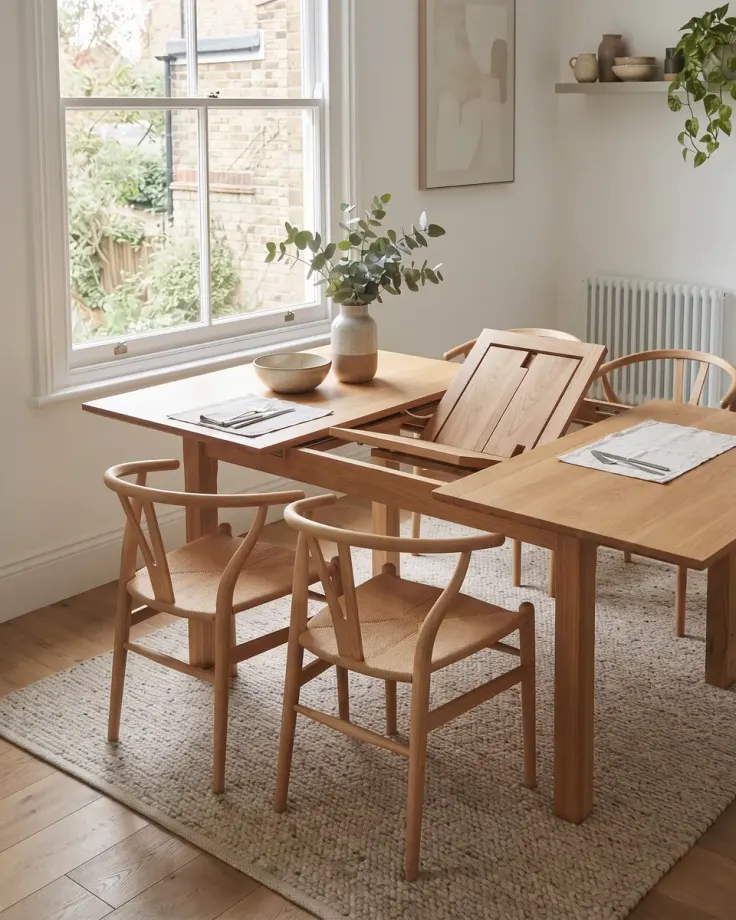
Solid wood dining tables
Fixed tables in oak, walnut or ash, with a top of 30 to 40 mm on four corner legs, a trestle or a central base, oiled or lacquered. Sized by the rule of 60 cm per person and 90 cm around the table.
Extending dining tables
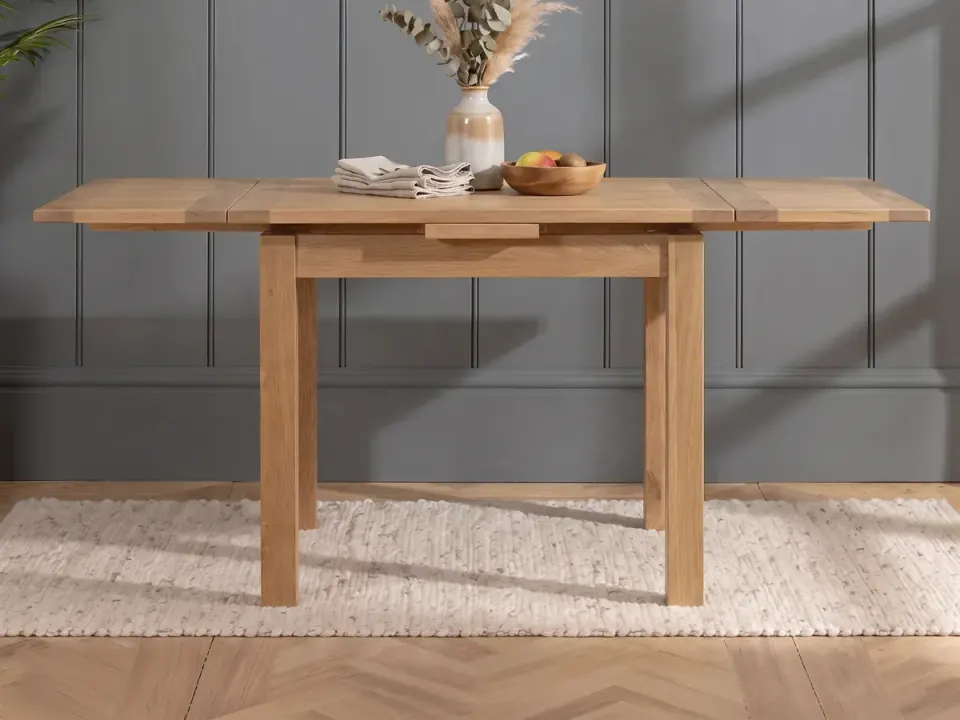
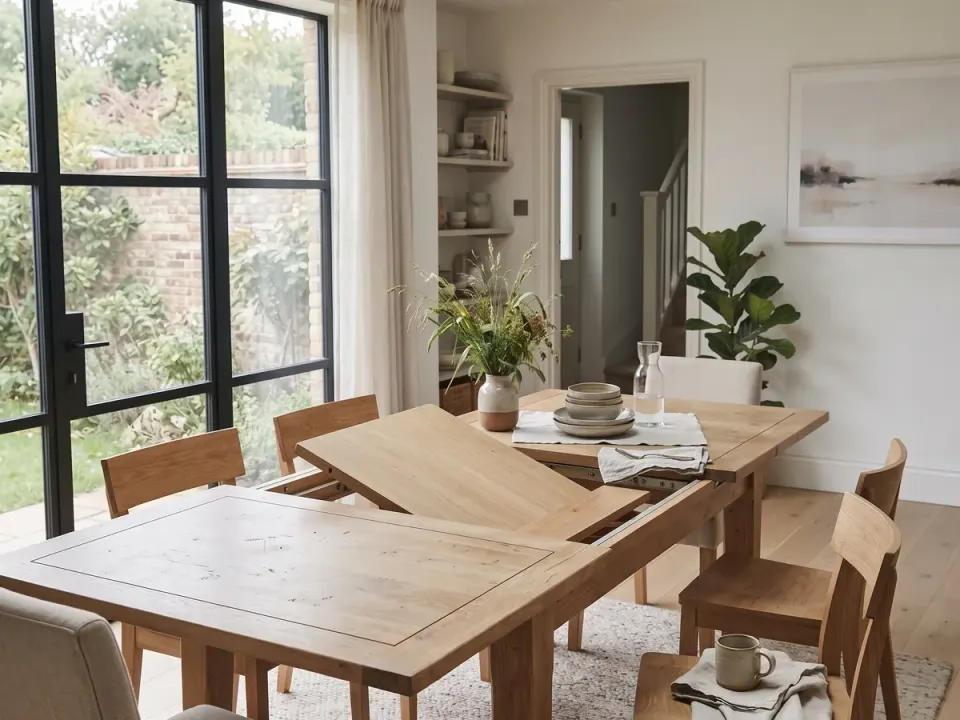
A 180 cm table that opens to 240 cm seats six every day and eight for guests. Centre leaf on slides, butterfly leaf folded inside the table, or two end extensions: the mechanism is chosen from where the leaf can live and how many hands open it.
Drop-leaf and console tables
For small flats where the table cannot take four metres of floor: leaves that hang down on hinges and rise when guests arrive, or a narrow console that opens into a full table.
Round and oval tables
Round tables of 100 to 150 cm for four to six people, on a pedestal so no leg is in the way, or a round table with a centre leaf that becomes an oval. The answer for a square room and for a fifth guest.
Modern lacquered and veneered tables
Matt lacquered tops in any colour or veneered oak and walnut over a stable core, for a light modern dining room where the table should read as one calm surface without visible joints.
Benches and sideboards to match
A bench that slides fully under the table on the wall side, and a sideboard for tableware in the same wood and finish as the table, so the dining room reads as one set.
Dining table models we build
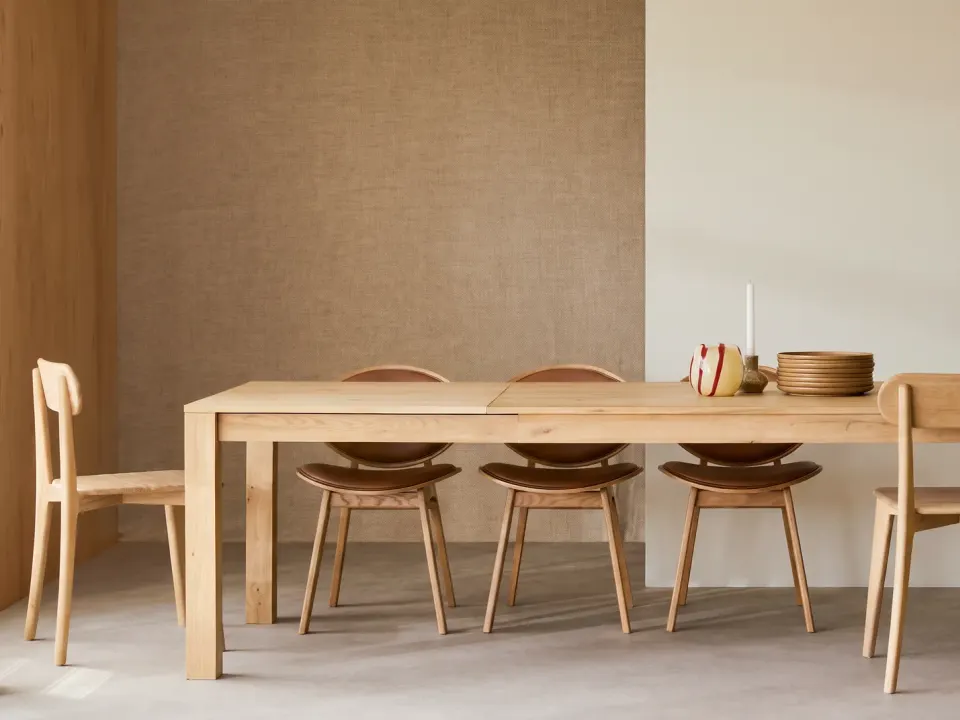
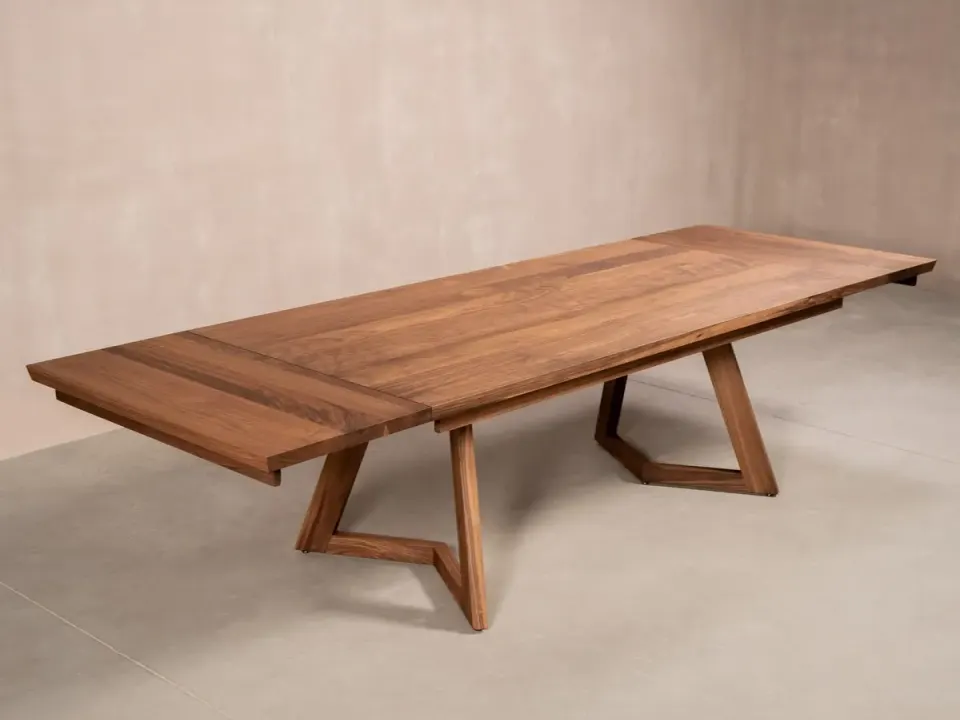
The four models we build most: an oak extending table open for six, a walnut table with end extensions on angular supports, a small oak draw-leaf table extended at both ends, and a centre leaf on metal slides. The model is chosen from your room and your guests, not from the photo.
Materials and finishes
Materials for dining tables
A dining table takes hot dishes, spilled wine and homework every day, so the top is chosen for the wear it will see and the base for stiffness. These are the families we build dining tables from; the MDF vs melamine guide explains what to ask for.
Solid wood
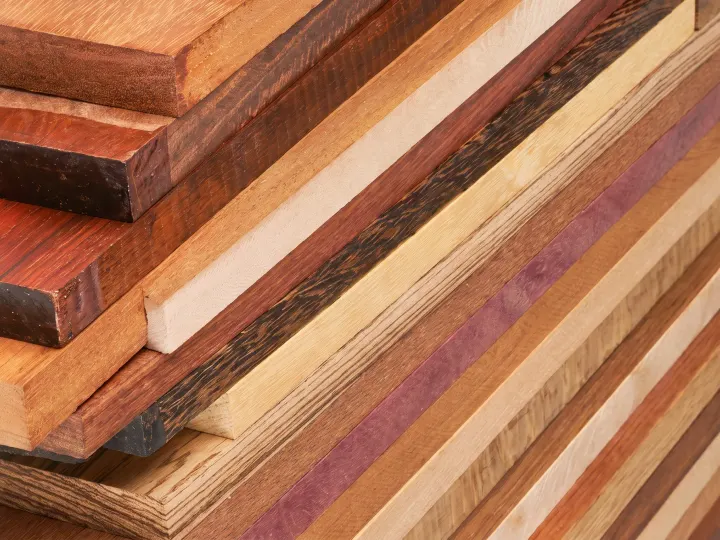
Oak, beech, walnut and ash, selected and dried for interior use. For worktops, table tops, frames and handles, where the surface has to take knocks and be sanded back to new.
Wood veneer
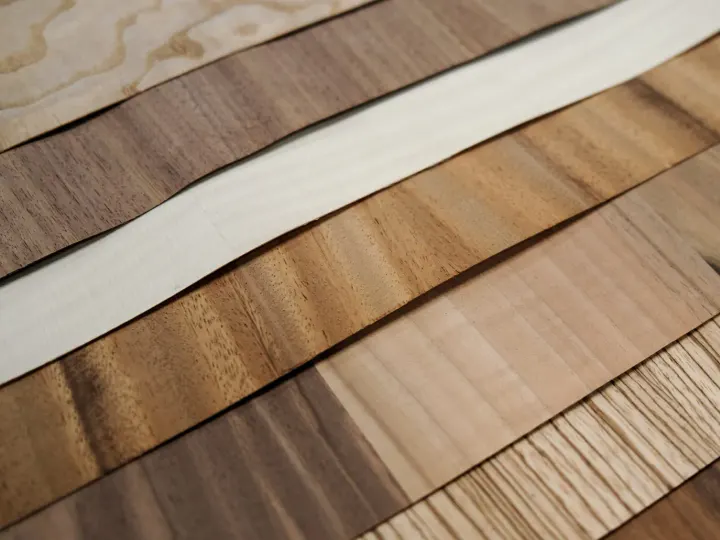
A thin layer of real oak, walnut or ash bonded to a stable board core. The look and touch of solid wood with far less movement, so large doors and panels stay flat for years.
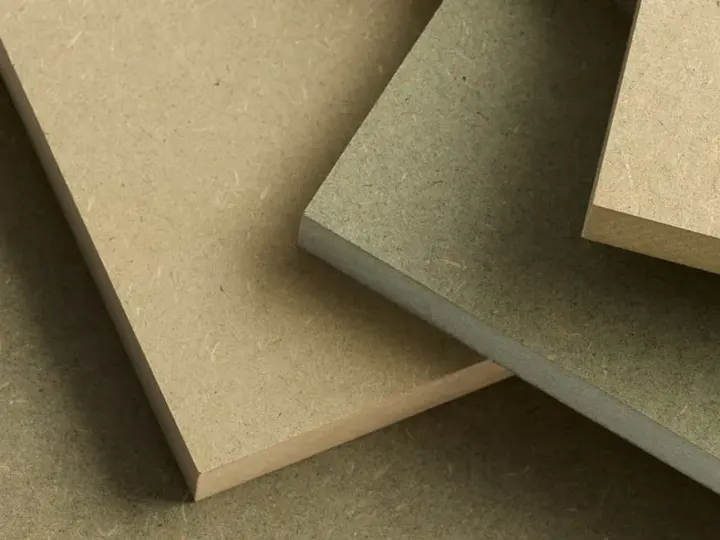
MDF (lacquered or moisture-resistant)
A dense, uniform fibreboard that machines cleanly. Moisture-resistant grades go into carcasses near water; lacquered MDF gives smooth matt or satin fronts in any colour, with no visible joints or grain.
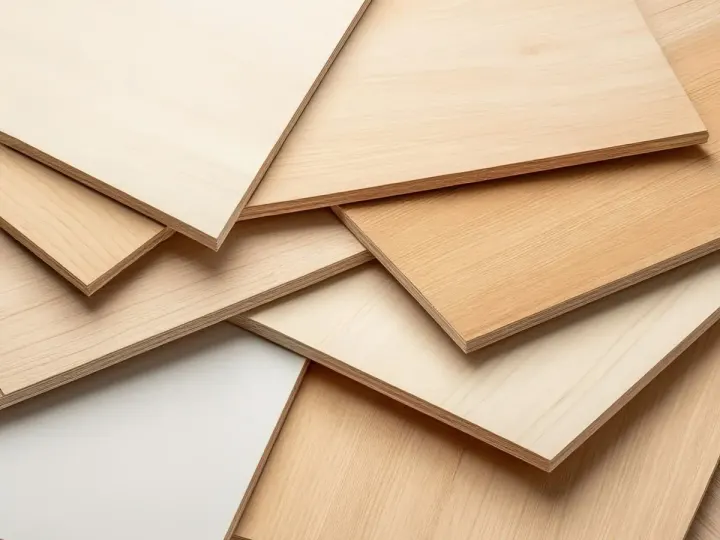
Plywood
Cross-laminated wood layers, usually birch: light, very strong and stable. For shelves that must not sag, drawer boxes, exposed-edge shelving and joinery that shows its construction.
How it works
From the first message to the last hinge
Consultation
Tell us what you need. We reply within one business day.
Site measurement
We measure the space ourselves, including walls out of square, sockets and pipes.
Drawings and quote
You approve 3D views and technical drawings alongside an itemized quote. Nothing is cut before that.
Build and install
Built in our Tirana workshop and installed by the same team, with a handover inspection together.
The right dining table size, taken from the room and the chairs
A dining table is measured from the space, not from the table. We keep 90 cm from the edge of the table to the wall or the sideboard on every side where someone sits, so the chair pulls out and a person passes behind it; the side nobody uses can drop to 75 cm. Then 60 cm of edge per person, 70 to 75 for long dinners or chairs with arms, and a width of at least 90 cm so two place settings face each other. That gives 120 x 80 to 90 cm for four, 180 x 90 for six, 210 to 240 x 90 to 105 for eight, and a round top of 140 to 150 cm for six. The full table, with the room each size needs, is in our extendable dining table size guide.
An extending table is measured open, not closed: the 90 cm are taken from the extended edge, and the chairs at the head move about half the extension. Every 60 cm of extension adds two comfortable seats, one on each long side; a 30 cm leaf gives elbow room, not two more chairs. Where the leaf lives decides the mechanism: a centre leaf on slides is the simplest and strongest but is stored elsewhere, a butterfly leaf folds inside the table and opens with one pair of hands, end extensions slide out from under the top and need free floor at both ends, so the table stands with its long side to the wall. Four things do not change once the table is built: the base, the depth of the apron, the mechanism and whether the leaf is stored inside.
The height is the one number that never moves, 75 cm, and comfort is decided under the top: the apron that joins the legs must leave at least 19 cm above a chair seat of 43 to 48 cm, which is why we ask about your chairs before we draw the table, and why a table with corner legs seats fewer people than the same length on a trestle. Solid tops are jointed from dried boards with room to move across the seasons, so the top stays flat and the seam stays closed. The table is built to match the living and dining furniture and the coffee table we make for the same room, and in an open-plan flat the kitchen beside it.
How a dining table is built in our workshop
The four order steps are above. This is what happens between the site visit and the first dinner at the table, and why the mechanism and the apron height are fixed before any board is cut.
Measuring the room and the chairs
The length and width of the dining space, the sideboard, the radiator and the door that opens towards the table, the rug, and the seat height and width of the chairs you own or plan to buy. The visit ends with the largest table the room takes, open and closed.
Technical drawing
A plan of the room with the table closed and open and the 90 cm zones around it, an elevation with the top thickness and the apron, and a section through the mechanism showing where the leaf lives. You approve the drawing before production.
Selecting and jointing the top
For solid wood we pick the boards for colour and grain, dry them for interior use and joint them into a top with breadboard ends or a frame that lets the wood move without cracking. Veneered and lacquered tops are laid on a stable core and every edge is shaped and sealed.
Mechanism and base
Slides, butterfly fittings or end extension rails are fitted and adjusted so the leaf lands flush and the seam closes; legs, trestle or pedestal are joined and test-assembled with the top.
Finishing and delivery
Solid wood is sanded through the grits and oiled or lacquered; lacquered tops are sprayed and cured in the workshop, never on site. The table arrives assembled, is placed at the distances agreed on the drawing, and the leaf is shown open and closed before we leave.
A master craftsman with 30 years at the bench
Sherif Hamiti built cabinetry and fine joinery in Athens for three decades before co-founding Formo. Every joint, edge and finish that leaves the workshop passes through his hands.
Technical drawings before the first cut
Ardineli Caci turns your idea into 3D models and production drawings that you approve first, so what gets built is exactly what you signed off, to the millimetre.
European boards and hardware, as standard
Moisture-resistant MDF and quality melamine boards for carcasses, solid wood and veneer where the design calls for it, soft-close hinges and runners on every door and drawer, edges sealed on every panel.
Installed by the team that built it
The same people who measured and built your piece install it: aligned fronts, adjusted hinges, sealed joints against the wall, and a handover inspection with you.
Cost
What affects the cost of custom furniture?
Every project is quoted from real site measurements, so there is no price list. These are the things that move a quote up or down:
Size and layout:
the number of units, tall columns, corners, islands and how much wall you are covering.
Materials:
melamine, lacquered or acrylic fronts, veneer and solid wood sit at very different points, and carcass and fronts can be mixed.
Hardware:
soft-close is standard; pull-out pantries, corner mechanisms, lift-up doors and internal organisers add to it.
Integration:
built-in appliances, lighting, sockets and ventilation planned into the cabinetry.
Site conditions:
walls out of square, pipes to work around, access and floor levels all affect the work on the day.
Questions
Common questions about custom dining tables
How much does a custom dining table cost?
The main factors are the wood or finish you choose, the size of the top, the base and whether the table extends, and with which mechanism. A small lacquered table on four legs and a long solid walnut table with a butterfly leaf sit far apart. Contact us and we will prepare a free, itemized quote.
What size dining table for six people?
About 180 x 90 cm rectangular, or 140 to 150 cm round. With 90 cm of clearance on every side, the rectangular table needs a room of about 360 x 270 cm. If the room cannot give that every day, a 140 or 160 cm table that extends to 200 or 240 is the usual answer.
Fixed or extending?
Fixed when the room gives the full table its 90 cm every day and you eat there in the same number most of the time. Extending when the table for guests would take floor the room needs on ordinary days. Most Tirana flats, where the dining table shares the living room, end up with an extending table.
How many seats does an extension add?
Two comfortable seats for every 60 cm of extension, one on each long side. A 30 cm leaf gives more elbow room, not two more chairs. We size the leaf from the number of guests you actually host, not from the catalogue.
Round or rectangular?
Round for four people in a square or small room: no corners in the way of knees and a fifth guest fits without anyone noticing. Rectangular for six or more, or for a long room where the table sits against a wall. A round table with a centre leaf that becomes an oval does both.
Solid wood, veneer or lacquered MDF?
Solid oak or walnut shows the grain, takes knocks and can be sanded and re-oiled at home. Veneer gives the same look on a stable core for very large tops that must stay flat. Lacquered MDF gives a smooth top in any colour with no visible joints and suits a light modern dining room; it is repainted rather than sanded.
Can you build the table around chairs I already own?
Yes, and we prefer to. The seat height and the width of your chairs, with or without arms, decide the apron height and how many fit along each side. Bring one to the visit or send its measurements, and the drawing shows the chairs at the table.
Do you deliver dining tables outside Tirana?
Yes. The table is built in the Tirana workshop and delivered assembled by our own team across Albania: Durrës, Vlorë, Shkodër, Elbasan, Fier and beyond. Delivery is scheduled together with your quote.
Keep exploring
Start a commission
Ready to plan your dining table?
Contact us and we will come back with a drawing for your room and a free quote.
Workshop in Tirana. We build and install across Albania: Durrës, Vlorë, Shkodër, Elbasan, Fier and beyond.
